


cape snake conservation logo
  • Home
  • About
  • Snake Removal Service Cape Town
  • Western Cape Snakes
    • Venomous
      • Berg Adder
      • Boomslang
      • Cape Cobra Snake Information and Identification Guide
      • Cape Coral Snake
      • Puff Adder
      • Rinkhals
    • Non-Venomous Snakes
      • Mole Snake
  • Research
    • Rinkhals Research
    • Cape Town Snake Survey
      • Snake Sightings
  • Products & Services
    • Snake Leg Protection
    • Recommended Books
  • Make a Donation

Search this site

Free eBook on Cape Town's Most Venomous
Download 'Snakes' Now!

Merch :)

Epic Snake Fight

https://youtu.be/LMWLYccoV0A

Snake Schwag

Snake Strikes Camera

https://youtu.be/fu9czc82NwI

Join the Community!

Patreon Cape Snake Conservation

Snake Guardz

Snake gaiters

Popular Posts

Cape Cobra VS Mole Snake
72 Comments
5 Reasons Why Getting Rid of Snakes is a BAD Idea
42 Comments
Watch this boomslang move!
35 Comments
Snake in Your House! Who Pays?
31 Comments
Snakes Don’t Chase Humans (Wait until you see the proof).
30 Comments
Cape Cobra Identification Made Easy
19 Comments
The Ultimate Cobra Snake Facts Guide
18 Comments
Deadly Cape Cobra Bite Attempt - Snake Strike!
15 Comments
Fear of Snakes: Learned or Genetic?
11 Comments

Recent Posts

  • What to do if You See a Snake
  • Snake Catcher Diaries: Are Snake Catchers Crazy or Not?
  • Getting Whipped - by a Karoo Whip Snake!
  • Even Snakes Get the Blues
  • Watch this boomslang move!

Like us on Facebook!

Recommended Websites

  • Cape Reptile Institute
  • Helderberg Snake Removals

Berg Adder

By Grant
Saturday, November 19th, 2011

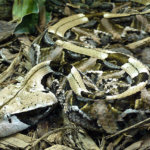
The berg adder, Bitis atropos, is often mistaken for its larger cousin the puff adder.

However it is considerably smaller; it lacks chevron markings and is generally restricted to mountainous regions although it can be found at sea level in areas where mountains arise suddenly such as on the Cape coast.

The berg adder is a full-blooded and somewhat nervous snake. When encountered it hisses loudly and strikes readily and rapidly if cornered but prefers to retreat into the safety of nearby vegetation cover.

Bites rarely result and when they do they are seldom fatal. The berg adder’s venom has both cytotoxic and neurotoxic properties and may cause localised pain, increased heart rate and loss of balance.

A bite from a berg adder is serious and one should treat it as such by getting to a hospital for the appropriate symptomatic treatment.

Diet:

  • Rodents, lizards and frogs

Reproduction:

  • Viviparous giving birth to 4 to 15 young in autumn (March/ April)

Key ID points:

  • Relatively small. Average of 40 cm; maximum 60 cm
  • Keeled scales
  • Triangular head, distinct from body
  • Hisses loudly
  • Strikes readily
  • Lacks chevron markings seen in puff adders

Conservation Status: Least Concern


Berg Adder Gallery (click to enlarge)


Cape Snake Conservation
Copyright © 2018 All Rights Reserved
iThemes Builder by iThemes
Powered by WordPress