




In October 2013 we requested the participation of our readers to complete a survey on their experiences with snakes in
Cape Town. Here are the results of that survey. This article is long and may be a little heavy reading.
For a summarised more visual version of this research, please click this link - Research Poster.
Introduction
Snake populations may be declining worldwide. However, these trends are difficult to monitor due to the sporadic distribution and secretive nature of snakes. A further hurdle to successfully monitoring the health of global snake populations is one of resources; these types of studies require meticulous data collection over many years, manpower and money. Most of which are scarcely available.
One way to overcome this is through citizen science. That is - to collate scientific data submitted by members of the public. This method has generally been under-utilised in snake research but has shown some promise in other fields such as ornithology.
The detection of the rinkhals during a rinkhals research initiative in 2010 was largely due to the collection of publicly derived data. And although detecting these snakes is only the first step towards conserving them in the Western Cape (which could prove to be too late in the end), it was felt that to investigate the engagement of user groups at the regional level may not only be beneficial, but perhaps necessary for snake conservation.
These data, otherwise unavailable to conservationists and land managers, could be used to monitor snake population trends; a crucial step in planning to mitigate further declines.
This research aims to serve as a departure point for future snake citizen science initiatives.
Objectives
To investigate the viability of, and willingness of the public to participate in such an initiative we ask:
- Are snakes encountered frequently enough to warrant public driven snake research?
- What are the general attitudes and behaviours of the public towards snakes?
- Is there an optimal user group to target for this type of research?
- Which snakes are most commonly encountered?
- Are Capetonians able to positively identify Cape Town’s “Big 6?”
Results
This survey returned 113 responses. There was a 70% to 30% male to female split, 85% of participants were between 20 and 49 years of age. Twenty two percent of the respondents work outdoors at least once per week, while 62% of the study group visit nature areas on a monthly basis.
Of the 113 forms submitted, only three do not take part outdoor activities while 99% of the study population take part in either one or a combination of the given categories. The attitude of the respondents towards snakes returned positive results with only 14% showing a degree of dislike towards them.
Moreover, 62% never advocated killing snakes while the rest felt that it was permissible under certain circumstances, especially if a threat was perceived or the snake was injured. Snakes encounters appear to be a relatively common occurrence amongst the study population with 26% of participants sighting 10 snakes or more in the past 10 years. The snake most commonly encountered is the mole snake (Pseudaspis cana) followed by the puff adder (Bitis arietans) and the Cape cobra (Naja nivea).
While the data show a relatively high snake encounter rate, snakebite is uncommon with 7% of respondents reporting a bite of which only two (1.8%) were from venomous snakes. Pets were bitten more commonly. Nineteen percent indicated that their pet had been bitten by a snake; in this case, all were venomous. Snakes received a 78% level of positive identification, although this percentage was brought down significantly by misidentification of the berg adder (Bitis atropos) of which only 41% of respondents identified positively.
The incidence of snake encounter reported in this study is higher than expected. Although some respondents reported to have never come across a snake, 91% have encountered at least one snake while 26% reported seeing more than 10 snakes within the 10-year time-period set out for this study; 15% of which encountering more than 20 snakes.
Interestingly, there was no significant relationship between time spent outdoors and snake encounters. This is most likely due to the high percentage of encounters in urban and rural settings of which the combined total was reported at 44%. This indicates that an equal chance of encountering a snake regardless of outdoor-work or recreational activity.
Furthermore, the differences may arise from areas visited and the type of activities partaken in. Those that are fond of snakes may actively search for them and encounter them more frequently as a result. This study is limited in this regard, as it cannot differentiate between chance encounters and those actively searching for snakes. However, in this case, it does demonstrate that snake encounters are not limited to protected areas.
The attitudes of respondents towards snakes reported in this study are surprisingly (and encouragingly) positive. It is generally felt that snakes are loathed by the majority of the population, however the results of this study have demonstrated that 66% of respondents “like” or “love” snakes while 20% neither liked nor disliked them. However, it must be noted that this can by no means be said to reflect the population as a whole; these data were predominantly collected from people who spend a great deal of time in nature areas, and are likely to be appreciative of biodiversity in general.
Sixty two percent reported that it is never permissible to kill a snake. This attitude is congruent with those that have an appreciation for biodiversity. While the remaining 38% only advocated killing a snake in situations where the snake was perceived to be a threat to animals or people (especially children), this perception was significantly linked to the individuals feelings towards snakes – a perception which is commonly skewed by fear.
In our experience, killing a snake is never necessary. Ensuring that people and pets are out of harms way is often the only course of action needed while waiting for a competent snake handler to remove the animal safely.
The majority of snakebite in South Africa occurs when people are attempting to catch or kill a snake. This study shows some evidence of this in the differences between human-snakebite and animal-snakebite occurrence. Nineteen percent of respondents reported a bite to one of their pets by a venomous snake versus only 1.8% of venomous snakebite reported in people. This statistic could be explained by the tendency of domestic animals to engage with snakes leading to a greater chance of a bite.
Those that felt positively towards them were unlikely to kill a snake no matter the reason. Although no study would be able to change the attitudes of perceptions of people towards snakes, education programmes would do well to demonstrate that the best method for avoiding snakebite is not to engage with them. Although this study is not able to demonstrate it statistically, it appears that domestic animals interfere with snakes more and thus increase their chances of being bitten.
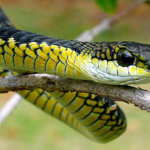
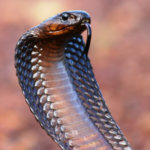
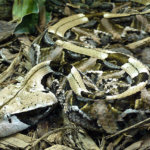
The survey population showed a relatively good level of snake awareness. The snakes utilised for identification in this study, namely: berg adder (Bitis atropos), boomslang (Dispholidus typus), Cape cobra (Naja nivea), puff adder (Bitis arietans) and rinkhals (Hemachatus haemachatus), were chosen on strength of their venom toxicity while the mole snake (Psuedaspis cana), was included due to its size and commonness.
Apart from the berg adder, a secretive and rarely seen snake, the remaining snakes were positively identified by the majority of participants. Interestingly the rinkhals, previously not commonly known and often misidentified amongst Capetonians, was correctly identified by 82% of the study group even though it is less commonly seen than berg and puff adders.
Although this study cannot determine whether similar scores could be obtained with live specimens, it appears to indicate that prior citizen science initiatives have increased the general awareness of the rinkhals and that utilising future citizen science initiatives may well be justified. Furthermore, it was reported that there is a general willingness to report snake sightings to a dedicated database should it be initiated.
Interlude…:)
If you have read through all of that congrats! We thought we’d share this funny video to give you a break.
We’re not normally supportive of snake pranks, but we like this one.
[embedplusvideo height=”400″ width=”608″ editlink=”http://bit.ly/19vXdGW” standard=”http://www.youtube.com/v/Cusl08YD-VI?fs=1&hd=1″ vars=”ytid=Cusl08YD-VI&width=608&height=400&start=&stop=&rs=w&hd=1&autoplay=0&react=1&chapters=¬es=” id=”ep4884″ /]
Conclusion
There is consensus among herpetologists that snake populations are declining globally, largely due to anthropogenic factors. However, our ability to document these trends is limited by a lack of long- term data. Evidence of such a decline has been reported in recent years with the loss of a number of local rinkhals populations and there is currently no quantitative data on population trends for any of the other snake species occurring in the City of Cape Town metropolitan area. Ecologically, snakes play a pivotal role in the functioning of the ecosystems that they are found in.
Citizen science is a research technique that enlists the public in collecting scientific data. Despite its benefits, citizen scientists have been relatively underutilised in herpetological research and conservation. SARCA has been the only large-scale citizen science initiative to date in South Africa. Although successful as an atlas project, the finite temporal-scale of the initiative diminished its ability to monitor meaningful long-term population trends. Therefore, it may be necessary to engage the public on a regional scale by initiating targeted and focussed citizen science projects that can be carried forward over indefinite temporal scales.
However, such an initiative to be successful one needs to ascertain the viability and willingness of the public to engage in it. This study demonstrated that the public encounters snakes regularly enough, regardless of outdoor activity or snake-attitude to justify engaging the public in snake citizen science initiatives. The ability of respondents to successfully identify snakes was significantly linked to their attitudes towards them.
Although it is not possible at this point to indicate when and by which groups snakes are most likely to be encountered by, it appears that one can deduce that those that appreciate snakes are more likely to identify them correctly and are less likely to persecute them. Furthermore, regardless of their feelings and attitudes towards snakes, respondents have shown a significant willingness to contribute to snake citizen science initiatives.
In order to prevent further snake population declines, we should be assuming the worst and putting mitigation measures in place while collecting data. A local citizen science initiative that utilises encounter data from members of the public appears to be justified due to the willingness and encounter rate of respondents in this study. Furthermore, a focussed citizen science initiative could have added educational benefits; a change in attitude, if the statistics are anything to go by, could reduce snakebite and snake-persecution rates while increasing the accountability of people and conservationists in detecting changes in our ecosystems by monitoring snake population trends.
Recommendations
Due to the relatively high frequency of snake encounters and willingness of the public to submit these records, long-term snake population monitoring may be achieved through a dedicated citizen science programme. In order for this to be successful, the programme should follow that of the avian monitoring programme eBird.
A panel of experts would be required to approve identifications and participants should have the freedom to access data on snake distributions while keeping track of their own submissions. The more interactive the programme the more likely participants will be to submit data continually. This programme should include an educational component that empowers the public through training on snake identification and the ecological benefits of snakes.
The details of local snake handlers should also be included to assist with snake translocation in order to reduce persecution and the chances of snakebite.
References
- Reading CJ, Luiselli LM, Akani GC, Bonnet X, Amori G, Ballouard JM, et al. Are snake populations in widespread decline? Biol Lett. 2010 Dec 23 [cited 2013 Nov 9]; 6(6):777– 80. Available from: http://www.pubmedcentral.nih.gov
- Durso AM, Willson JD, Winne CT. Needles in haystacks: Estimating detection probability and occupancy of rare and cryptic snakes. Biol Conserv. Elsevier Ltd; 2011 May [cited 2013 Nov 9]; 144(5):1508–15. Available from: http://linkinghub.elsevier.com
- Price SJ, Dorcas ME. The Carolina herp atlas: An online, citizen-science approach to document amphibian and reptile occurences. Herpetol Conserv Biol. 2011;6(2):287–96.
- Gibbons JW, Scott DE, Ryan TJ, Buhlmann KA, Tuberville TD, Metts BS, et al. The Global Decline of Reptiles, Déjà Vu Amphibians. Bioscience. 2000;50(8):653–66.
- Dorse C, Holmes P, Wood J. Biodiversity Report. Cape Town; 2008.
- Wingate L. Snakes Alive. Cape Town: Howard Timmins; 1967.
- Smith G. The status of the rinkhals Hemachatus haemachatus in the City of Cape Townmetropolitan area, Western Cape, South Africa. African Herp News. 2011;(53).
- Bonney R, Cooper CB, Dickinson J, Kelling S, Phillips T, Rosenberg K V., et al. CitizenScience: A Developing Tool for Expanding Science Knowledge and Scientific Literacy. Bioscience. 2009 Dec [cited 2013 Oct 30];59(11):977–84. Available from: http://www.jstor.org/
- Conrad CC, Hilchey KG. A review of citizen science and community-based environmental monitoring: issues and opportunities. Environ Monit Assess. 2011 May [cited 2013 Oct 30]; 176(1-4):273–91. Available from: http://www.ncbi.nlm.nih.gov/
- Tregidgo DJ, West SE, Ashmore MR. Can citizen science produce good science? Testing the OPAL Air Survey methodology, using lichens as indicators of nitrogenous pollution. Environ Pollut. Elsevier Ltd; 2013 Nov [cited 2013 Nov 1]; 182:448–51. Available from: http://www.ncbi.nlm.nih.gov/
- Tulloch AIT, Possingham HP, Joseph LN, Szabo J, Martin TG. Realising the full potential of citizen science monitoring programs. Biol Conserv. Elsevier Ltd; 2013 Sep [cited 2013 Oct 31]; 165:128–38. Available from: http://linkinghub.elsevier.com/
- Sullivan BL, Wood CL, Iliff MJ, Bonney RE, Fink D, Kelling S. eBird: A citizen-based bird observation network in the biological sciences. Biol Conserv. Elsevier Ltd; 2009 Oct [cited 2013 Oct 30]; 142(10):2282–92. Available from: http://linkinghub.elsevier.com/
- SARCA. Southern African Herpetology. 2009. Available from: http://www.sarca.adu.org.za
- Nature Reserves. 2010. Available from: www.capetown.gov.za/environment
- Cape Snake Conservation. 2013. Available from: www.capesnakeconservation.com
- Rubenfeld G. Surveys : An Introduction. Respir Care. 2004; 49(10):1181–5.
- Google Docs. 2013. Available from: docs.google.com
- Boynton PM. Hands-on guide to questionnaire research Administering , analysing , andreporting your questionnaire. BMJ. 2004;328(June):1372–5.
- Eiselen R, Uys T. Questionnaire design. University of Johannesburg. 2005: 1–22.
- Huston P. Reporting on surveys: Information for authors and peer reviewers. Can MedAssoc. 1996;154(11):1695–704.
- Michael RS. Crosstabulation & Chi Square: 1–8. Available from: http://www.indiana.edu/
- Likert RA. A technique for the development of attitude scales. Educ Psychol Meas.1952;12:313–5.
Thank You!!
Finally, a BIG thank you to all those that participated in the Cape Town Snake Survey. The response was incredible and encouraging.
You guys rock!