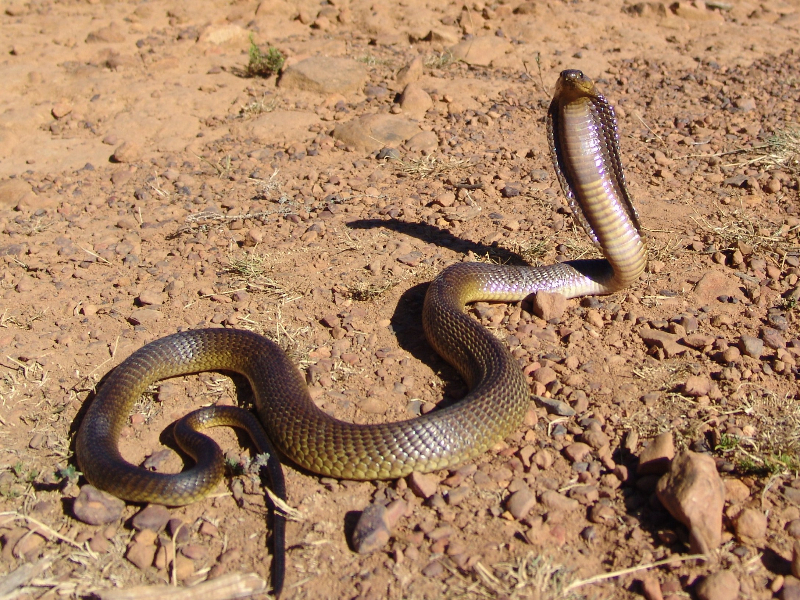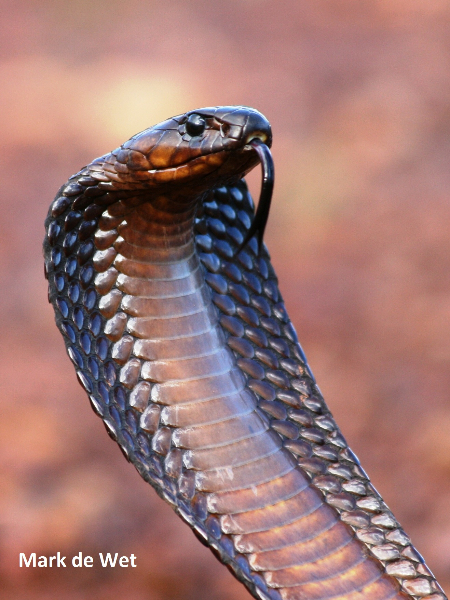

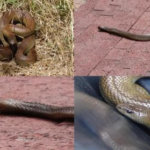
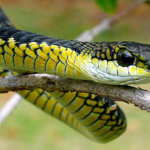

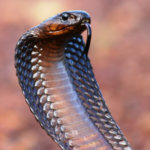
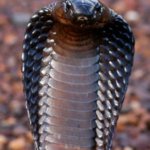
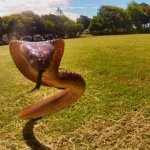
The Cape cobra, Naja nivea, is most easily distinguished by it’s ability to spread a hood. It is highly venomous and possesses the most toxic venom - drop for drop - of all the cobras on the African continent. The venom is potently neurotoxic, if bitten medical help should be sought immediately; assisted respiration may be required.
The Cape cobra is active during the day where it will hunt in burrows, trees or anywhere else that it can find a suitable meal. If cornered and/or startled, it will face the enemy (especially if cornered) and spread a broad hood in typical and iconic cobra fashion and may also let out a loud hiss
If these warnings are not heeded you are asking for serious trouble. Like any other snake the Cape cobra will only bite if it feels that it has no other option and that it’s own life is in danger. A little respect goes a long way.
Important!! The Cape cobra will not always spread a hood. Many people mistake them for mole snakes; a potentially deadly mistake for both man and the snake. Unless you have a very good reason you should never attempt to handle any snake you come across.
This may seem obvious but you’ll be surprised at how many people get hurt this way - If you aren’t sure leave it alone.
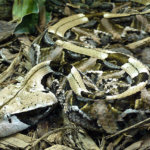
Cape cobras show extreme colour variation - even in the same location, so it’s not a good idea to use colour for identification purposes.
To see the differences between a Cape cobra and a mole snake click here.
Diet:
- Birds, lizards, other snakes, rodents and frogs.
Reproduction:
- Oviparous laying up to 20 eggs in midsummer (Dec-Feb)
Key ID points:
- Medium sized snake up to 2 metres
- Smooth scales
- Broad head, indistinct from body
- Spreads a broad hood in defence when confronted
- Non-spitter
- Colour extremely variable ranging from yellow to black
- Juveniles may appear banded and have one or two broad black throat bands
Conservation Status: Least Concern
Click here for more general cobra information and cobra snake facts.
Cape cobra Gallery (click to enlarge)